Some can say “I love you,” share a home, raise children, and still break the trust binding relationships together. That contradiction makes infidelity difficult to understand. How can a person care about someone while making choices that could hurt them? Psychology offers some explanations, but none makes betrayal inevitable or acceptable.
Discussions on this topic in regards to our community start by making room for our distinct experiences. Black relationships do not all look alike, and infidelity is not a racial trait; however, research relies on examining relationships broadly; it does not establish a uniquely Black psychology of infidelity. Still, we can connect the findings to familiar conversations about loyalty, vulnerability, and what level of complexity each has.
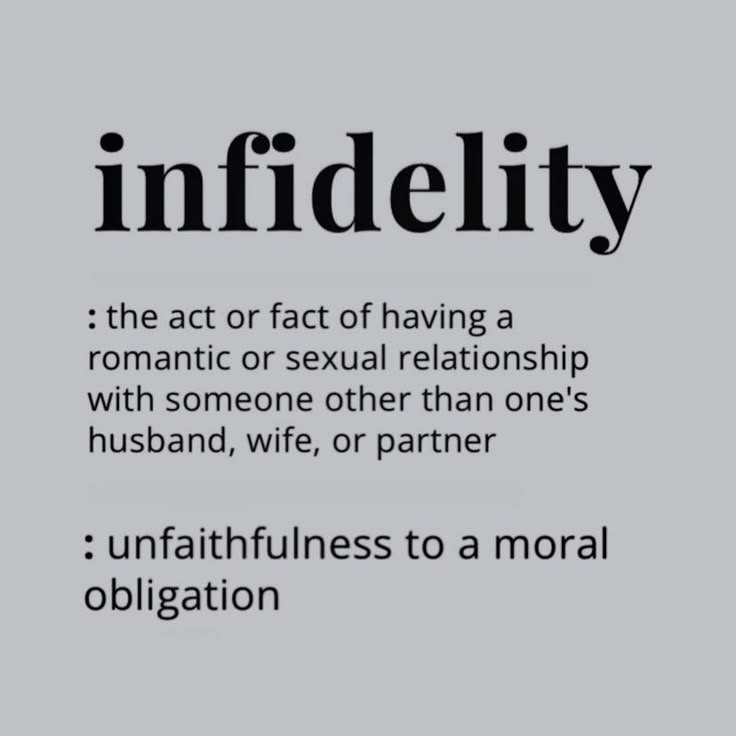
Infidelity happens when someone crosses the relationship’s agreed boundaries around romantic or sexual involvement. Depending on those agreements, that could include physical contact, a secret romantic connection, or sexual messages. A friendship is not automatically cheating, but calling someone “just a friend” does not settle whether a boundary was broken. Couples need a shared understanding of what commitment truly means to each other.
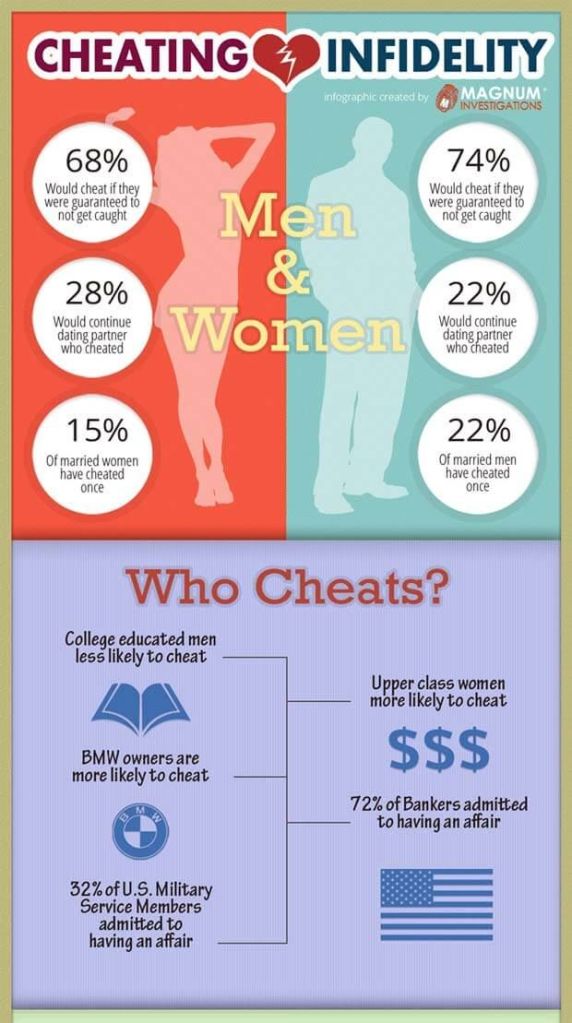
Researchers have identified several motives for cheating: feeling unloved or neglected, sexual desire, and circumstances such as stress or intoxication. These motives can overlap, and their explanation tells us what someone says drove their behavior; it does not make their partner responsible for that behavior. Imagine someone who feels noticed only when they are paying bills or solving everybody else’s problems. Attention from another person might feel powerful, and they may say to themselves “Somebody finally sees me.” That example illustrates how feeling neglected or wanting validation could become relevant. But feeling overlooked does not remove the choice to renegotiate the relationship or leave before starting another involvement.
Nor does every affair’s existence mean something was missing at home. In a study of people using Ashley Madison (an affair-seeking website), relationship quality did not significantly predict whether participants later reported an affair. That selected group cannot represent everyone, but the finding challenges the assumption that a betrayed partner must have failed to provide enough love. Psychologists refer to these patterns of closeness as “attachments.” Someone with attachment avoidance may struggle with depending on a partner or letting a person get emotionally close. A review of 17 studies found a link between insecurities and infidelity across different groups, but that pattern does not tell us who will cheat.
For readers who grew up hearing “Be strong,” “Don’t let anybody see you hurt,” or “Keep your business in the house,” talking honestly about insecurity may feel unfamiliar. Those messages are not universal in Black families, nor are they unique to them, but they raise an important question for reflection: “Have you learned how to express hurt, or only how to hide it?” Difficulty being vulnerable deserves attention, but it does not excuse dishonesty of any sort.
The person cheating may also experience a conflict between their actions and their identity. “I am a good partner” does not fit comfortably beside “I am deceiving someone who trusts me.” Psychologists call that discomfort cognitive dissonance. Research suggests that people sometimes reduce it by minimizing what happened or changing how they explain it to themselves. That can sound like, “It was only messages,” “It didn’t mean anything,” or “I still come home to you.” These statements may ease the speaker’s discomfort without addressing the broken agreement because coming home is not the same as being trustworthy. Providing financially also does not answer whether someone has honored the relationship’s boundaries.
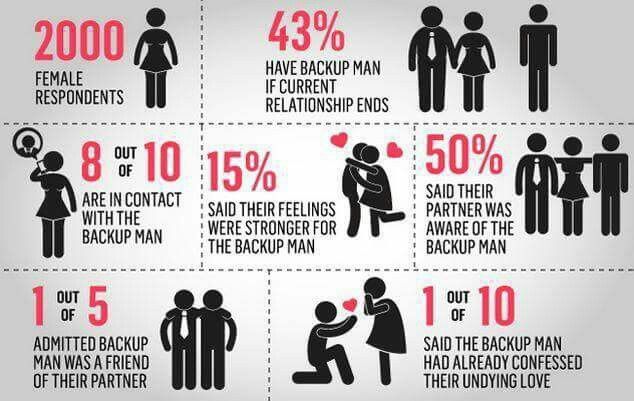
As an affair continues though, guilt does not necessarily increase. Some people may feel more conflicted, while others may become more comfortable with their justifications. Researchers have examined changes in attitudes and self-image among people engaging in infidelity, but their findings do not establish that everyone moves from guilt to comfort and vice versa. A longer affair can also involve emotional closeness, and research found that affairs motivated by feeling unloved or neglected were associated with greater intimacy with the affair partner. Relationship motives were also associated with longer affairs and the original relationship’s ending. However, the findings cannot establish whether time created the attachment or whether attachment kept the affair going. Length alone does not prove love, compatibility, or a plan to leave despite popular beliefs.
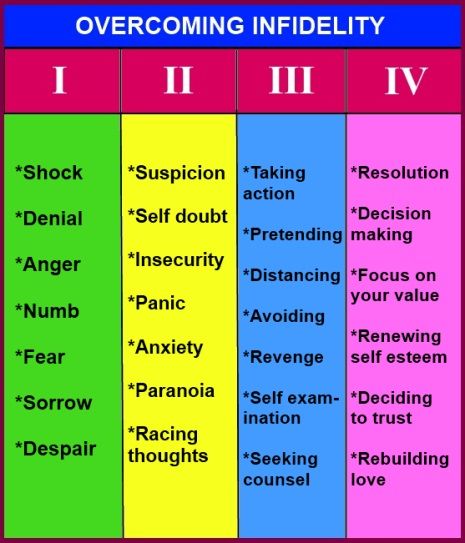
For the betrayed partner, discovering infidelity can undermine not only trust in the relationship but also their sense of self and emotional security. It can raise questions about personal judgment and shared memories: “Was I the only one who thought we were happy?” “What else don’t I know?” Research and clinical descriptions identify an array of reactions ranging from intrusive thoughts to constant investigating for information. Some people experience post-traumatic stress symptoms, though these do not necessarily indicate a PTSD diagnosis. If relatives, friends, or social media followers know about the betrayal, a person may also feel pressure to manage everyone else’s opinions. One might say, “Keep your family together,” and another might say, “You look weak if you stay.” These both are possible social pressures, not research findings about Black people as a group, but neither audience gets to decide what someone must accept. Staying does not atomically prove strength, and leaving does not automatically mean someone gave up.
The length of an affair may influence how the betrayal feels, but there is no formula showing that every additional month causes more psychological harm. A prolonged affair might make someone reconsider years of sacrifices and future plans. Yet a single encounter can also cause profound hurt. The person affected does not need to prove that betrayal lasted “long enough” for their feelings to matter. The same caution applies to the original relationship’s length. More years may mean more shared responsibilities and memories, but the research discussed here does not establish that a 20-year relationship produces greater distress than a two-year relationship. Time spent together does not fully reflect emotional investment, and feelings can shift from day to day after infidelity is discovered. According to clinical descriptions, a person may experience shifting feelings of numbness, anger, and deep sadness after discovering infidelity. Saying “I thought you were over it” treats processing betrayal like a deadline rather than a changing emotional experience.
In conversations about Black love, there is room to celebrate commitment without making suffering a requirement for proving it. Neither Black women nor Black men owe anyone silent endurance to demonstrate loyalty. Strength can include the admittance of hurt, setting boundaries to prevent further hurt, or taking personal accountability for complacency. The research offers patterns, not a way to read someone’s mind. Much of it relies on people explaining their behavior afterward, and a correlation does not prove what caused what. What we can say is that love, commitment, and trust are all connected but in different ways. Someone can still feel love after breaking a commitment. Someone else can still feel love after losing trust. Love may explain why a relationship matters, but it does not erase responsibility for how people treat each other. So I leave you with this: When we say “Black Love is strong,” are we measuring the trust we build or how much betrayal we expect each other to survive?


Leave a Reply