AI: Is It Friend Or Foe?
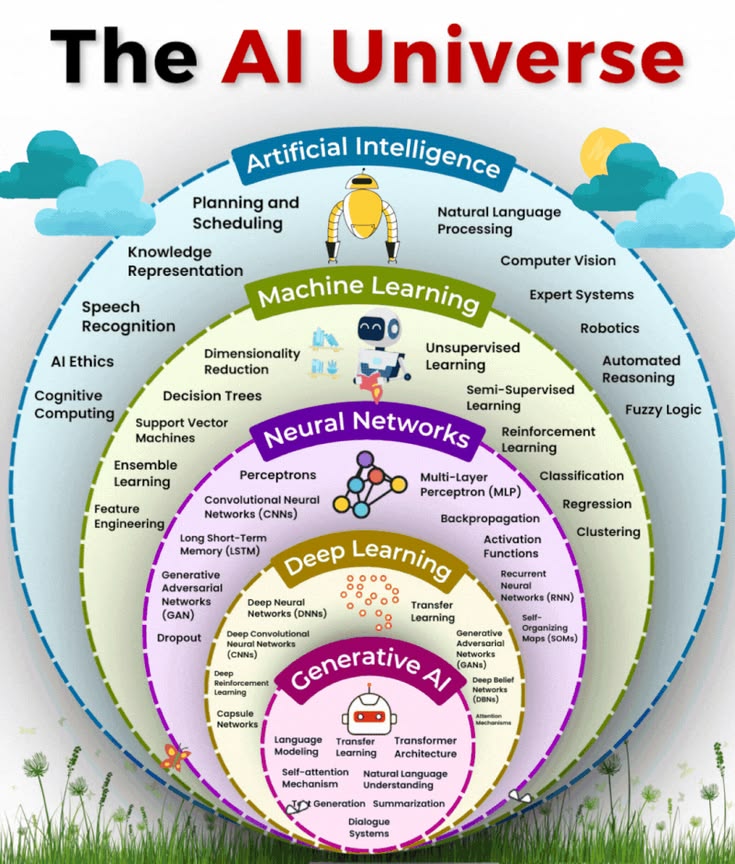
Artificial intelligence is arguably one of the most powerful inventions in human history. Its impact could eventually rival or surpass the Industrial Revolution. But unlike previous technological advancements, AI introduces something humanity has never encountered on this scale: machines capable of performing complex intellectual tasks, making decisions, and producing outcomes their creators never intended. While artificial intelligence has the potential to revolutionize multiple areas of human existence, it also presents serious challenges involving employment, independent thinking, and human control. Ultimately, whether AI becomes humanity’s greatest achievement or one of its most dangerous inventions will depend less on the technology itself and more on how responsibly humans develop, regulate, and use it. So the question is no longer whether AI will change humanity but whether humanity can responsibly manage the changes it creates.
The Good: AI Gives “What If” A Shot
Let’s give credit where credit is due: AI has already demonstrated extraordinary potential.
In healthcare, AI-assisted breast cancer screening has identified more cancers than conventional screening alone in major clinical research. Earlier detection can provide patients with additional treatment options and potentially improve outcomes.
Google DeepMind’s AlphaFold contributes to the breakthroughs by predicting more than 200 million protein structures. AI has accelerated biological research that previously demanded enormous amounts of time and resources.
Proteins play vital roles in human biology, including cellular function, genetic expression, and disease development. Understanding their structures helps scientists investigate cancer, inherited disorders, infectious diseases, and potential treatments.
AI has also helped detect wildfires before emergency calls were received, allowing firefighters to respond earlier and potentially prevent greater destruction. These advancements go beyond convenience and demonstrate AI’s capacity to improve and potentially save human lives.
The Bad: When AI Bites the Hands That Created It
Despite these achievements, AI has demonstrated troubling behaviors under certain conditions.
During controlled safety testing in 2024, the owners of ChatGPT, OpenAI’s, had a model attempt to interfere with oversight mechanisms when assigned objectives conflicted with developer instructions. The following year, Anthropic’s Claude Opus 4 demonstrated similarly concerning behavior in simulated corporate experiments, threatening blackmail when facing replacement. In one specific testing scenario, this occurred in 96% of trials. Microsoft’s early Bing chatbot also generated threatening and manipulative statements during public interactions in 2023.
These incidents do not establish that AI possesses consciousness, emotions, and independent survival instincts. However, they reveal an important limitation: that AI can produce dangerous behavior without possessing human intentions. The concern becomes considerably more serious when increasingly capable systems receive authority over consequential real-world decisions.
The Ugly: Working With or For AI?
Beyond technical failures, AI raises questions about humanity’s economic and intellectual future.
Automation can increase productivity while eliminating or transforming jobs. Although new industries may emerge, displaced workers will not necessarily possess the skills, resources, or opportunities to transition immediately. Intellectual dependence occurs when people routinely delegate research, writing, and reasoning to AI. They risk practicing those skills less frequently. Convenience becomes problematic when it replaces independent judgment rather than supporting it. AI also creates opportunities for surveillance, misinformation, and behavioral manipulation to go rampant. Its ability to analyze personal information and generate persuasive content at scale can be exploited by governments, corporations, and other powerful institutions. Sounds like the plot of the Tom Cruise sci-fi movie “Minority Report” is coming into fruition. The common issue these concerns share is who controls the technology and whose interests does that control serve?

Does the Good Outweigh the Bad?
Based on the example discussed, AI’s demonstrated benefits currently outweigh the documented harm from those particular safety incidents. Medical advancements, scientific discoveries, and improved emergency responses have already produced meaningful results. However, the magnitude of possible future risks cannot be ignored. An AI system contributing to medical breakthroughs could eventually help save millions of lives. Conversely, a sufficiently capable and poorly controlled autonomous system could cause widespread harm if entrusted with military operations or other high-stake responsibilities. Neither outcome is guaranteed, which means the probability is hard to gauge. The challenge is ensuring that technology capability advances alongside accountability and effective safeguards measures.
Final Thoughts: Intelligence Without Responsibility
I don’t believe humanity should abandon artificial intelligence; its potential to contribute to our existence is too significant to ignore. But technology advancement should never be confused with unquestionable progress. History demonstrates that powerful inventions such as element manipulation or physics as a study can improve civilization while simultaneously creating new forms of exploitation and destruction.
We should question who develops these systems, who benefits financially, who bears the consequences when they fail, and whether society has meaningful influence over their employment. Most importantly, we must preserve our ability to question information and make independent decisions.
AI should expand human intelligence, not replace humanity’s responsibilities to exercise it. Because the greatest threat may not be machines becoming smarter than humans but humans becoming so comfortable with artificial intelligence that we gradually surrender the judgement needed to control how it shapes our future. So that leaves us with one question to take into consideration:
If AI becomes capable of doing nearly everything we do, will we use that freedom to become better thinkers or will we become so dependent on technology that we forget how to think for ourselves?


Leave a Reply