Patriarchy’s influence on life
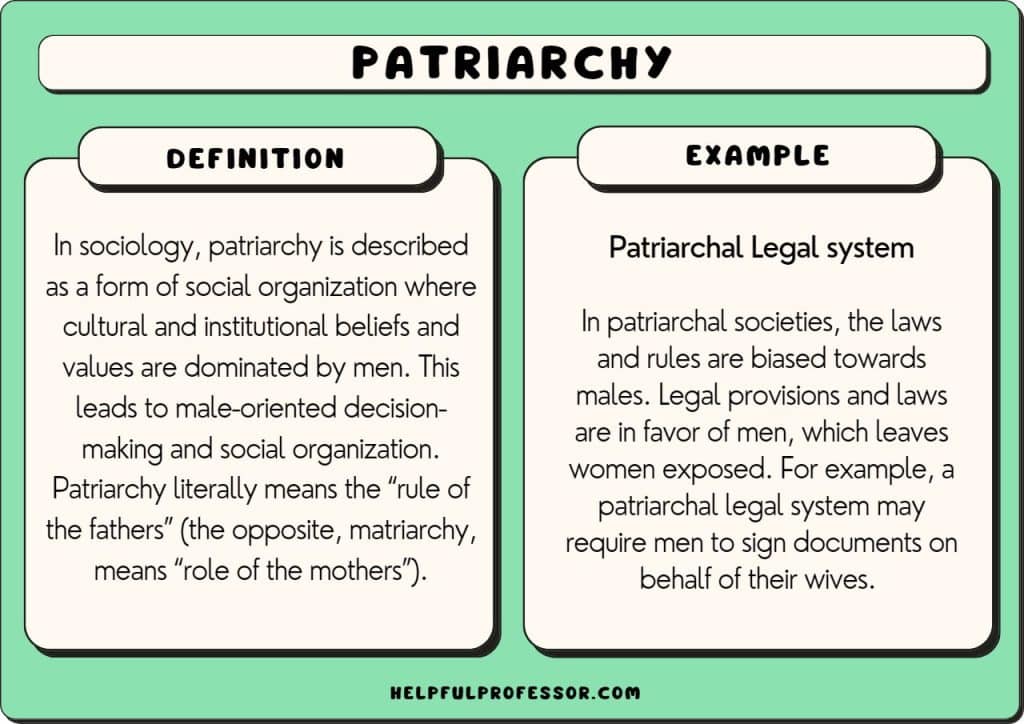
Too often I’ve witnessed or engaged in discussions regarding the validity of both matriarchal and patriarchal systems. Personally, I feel neither system produces better outcomes than the other, but since their origin, they’ve been heavily debated among both genders. Shared authority can create the harmonious balance that every union and society needs to transcend barriers. But in this piece, I will not go with the typical compare and contrast narrative only because in the midst of acquiring research on both topics, I had an epiphany. Information on patriarchy was easy to acquire with just a few keystrokes and library visits. However, when it came to the research of matriarchal systems, the information was either scarce or required diligent means outside typical research methods. I had to use every resource at my disposal, and then that’s when the topic for this piece came to fruition.
First and foremost, most of the information I’m going to disclose was and is still debated among historians. I think that it’s debated because of the institution of systemic racism, but that’s another topic for another blog. So viewers, read from a thought-provoking standpoint, use critical thinking to comprise an action plan to investigate further for your level of understanding. Candidly speaking, prior to this, I used to think that patriarchy was the brainchild of misogynistic Europeans, and matriarchy was feministic folklore. But with a little investigating, it’s been revealed to me that patriarchy has the ability to control multiple facets of life, and that’s alarming.

When I began researching matriarchy, a different question caught my attention: how might patriarchal authority have shaped the information available to us? Its influence could extend beyond whose voice carried more weight to who was allowed an education and decided whose ideas were worth perserving. My spidey-sense started tingling, but suspicion alone was not enough evidence. Historian Gerda Lerner, for example, argued that women and children were enslaved before men. Surviving records document their sale, but those records alone cannot establish who was enslaved first across all societies. Evaluating that argument requires examining expert translations and competing interpretations. I also learned that matrilocal describes couples living with or near the wife’s family, while matriarchy concerns women holding primary social and political authority. These terms describe different arrangements; their use does not itself prove that scholars concealed female rule. The distinction sharpened my focus… whether to demonstrate how unequal authority shaped the creation and circulation of knowledge and where am I drawing conclusions the evidence cannot yet support? These questions shifted my thought pattern tremendously.
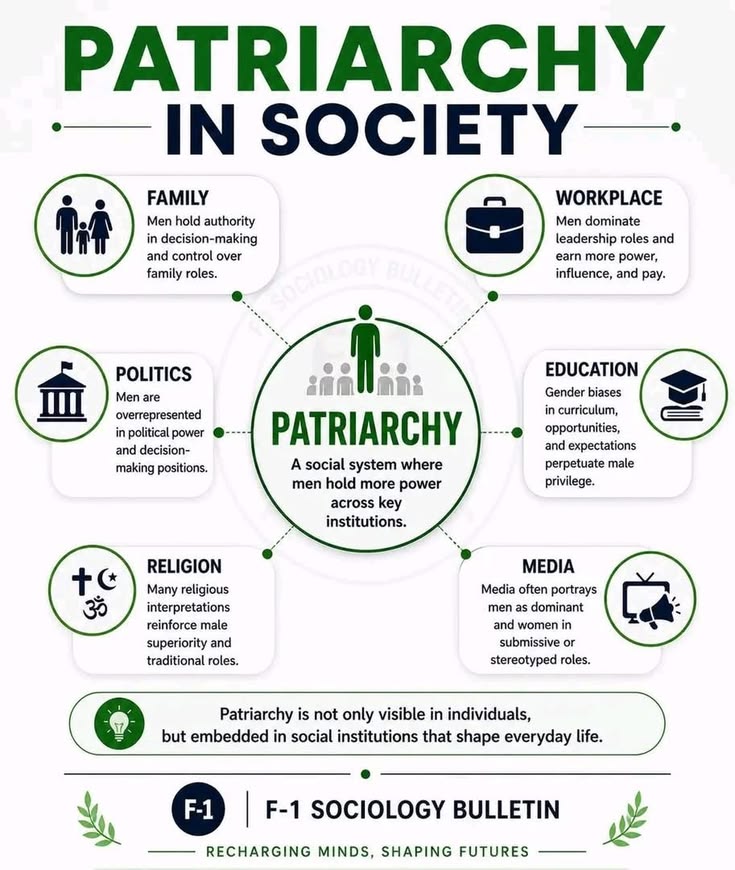
Patriarchy’s influence reaches beyond kings and governments. It appears wherever being male carries an assumed right to be believed. In everyday life, that can mean a father’s opinion automatically outweighing a mother’s, caregiving falling on women or men feeling pressured to prove their worth through money and emotional silence. But different responsibilities alone do not establish patriarchy; for example, a couple can freely choose a male breadwinner and a female caregiver while sharing overall authority. The distinction lies in whether both have a meaningful voice or whether gender settles disagreements before the conversation even begins. That imbalance can be accurate but still incomplete by not accounting for everything. A historical account may describe rulers and wars in detail while revealing little about women’s work or experiences. Likewise, complaints can remain unheard when the people receiving them consider the speaker less credible. However, claiming deliberate suppression requires evidence, and male leadership does not prove a coordinated effort to bury the truth.
History also demands distinction that gives these conversations context. Hatshepsut ruled ancient Egypt, yet women were generally excluded from its government administration. Her reign shows that one woman’s rise did not erase a system favoring male authority. There is no historical evidence of the invention of patriarchy being attributed to Black men as a group. Still, we do not have to create a system to reinforce it. Remaining silent when women are dismissed or excluded can help preserve its influence. But understanding patriarchy means examining how authority operates, rather than assuming every man is powerful or every woman is powerless. So I leave you with this: “When the people you love disagree with you, do they feel safe being honest or have they learned that keeping the peace means keeping quiet?”


Leave a Reply