Hypersexuality, medically referred to as compulsive sexual behavior, manifests as persistent, intense sexual thoughts, urges or behaviors that are difficult to control and interfere with daily functioning. While its presentation can vary among individuals, there are overlapping behavioral patterns in both men and women, with some gender-typical expressions influenced by social conditioning and psychological factors.
Behavioral Indicators for Both Men and Women:
- Preoccupation with sex: Distinguish intrusive sexual thoughts that disrupt work, school, or relationships.
- Compulsive behaviors: Repeated engagement in sexual activities (e.g., pornography consumption, masturbation, casual sexual encounters) despite adverse consequences.
- Loss of control: Failed attempts to reduce or cease behaviors.
- Escalation: Increasing intensity, frequency, or risk-taking over time.
- Emotional regulation: Utilizing sex as a means of coping with stress, anxiety, loneliness, or depression.
- Relationship strain: Infidelity, secrecy or neglect of emotional intimacy.

How It Often Manifests in Men:
- High frequency of pornography use, potentially escalating to more explicit content.
- Anonymous or multiple sexual partners, including transactional sex.
- Risk-taking behaviors (unprotected sex, public encounters).
- Detachment of sex from emotional connection.
- Greater likelihood of externalizing behavior (acting out rather than internalizing).
How It Manifests in Women:
- Sex tied to validation or emotional needs (seeking approval, attachments, or self-worth).
- Serial relationships or overlapping partners.
- Difficulty setting sexual boundaries.
- Engaging in sex despite low desire, driven by compulsion rather than pleasure.
- Increased internalized distress (shame, guilt, anxiety) due to social stigmas.
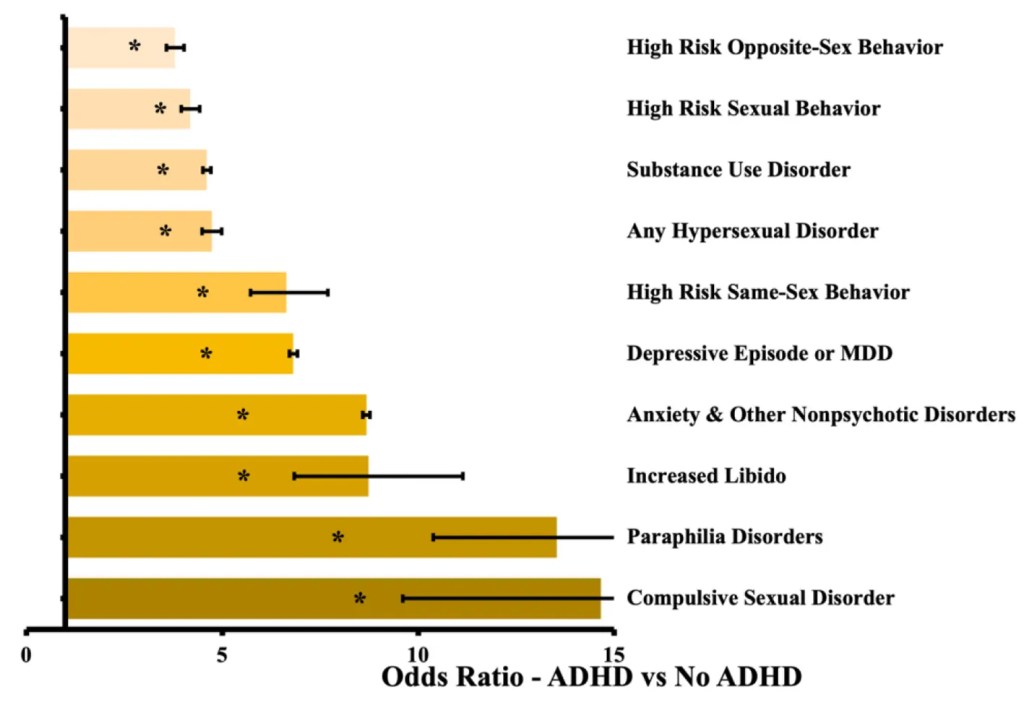
Hypersexuality is not merely characterized by an elevated sex drive. The defining factor lies in impairment and a lack of control. Impairment encompasses a structural abnormality in the mind or body, such as cognitive, motor, or sensory impairments. Conversely, a lack of control pertains to the behavioral consequence where an individual is unable to regulate impulses, emotions, or actions. Hypersexual behavior is occasionally associated with other conditions, including bipolar disorder, obsessive-compulsive disorder (OCD), attention deficit hyperactivity disorder (ADHD), and other trauma-related disorders.
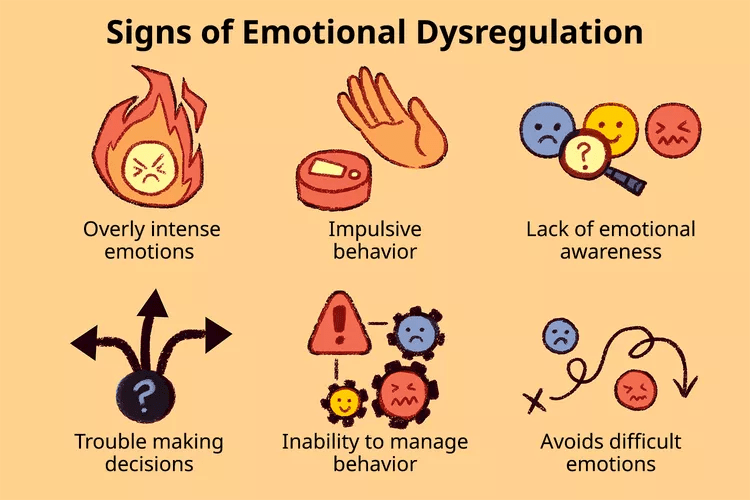
Behaviorally, hypersexuality is primarily driven by compulsion, emotional dysregulation, and consequences, rather than solely by frequency. While the outward expression may vary (ranging from more external to relational patterns), the underlying mechanism (lack of control and coping through sexual behavior) remains consistent.
 Melanated Sanity