
Ah, childhood… the magical time when we unknowingly set the stage for our future romantic escapades. It’s like a sitcom where the plot twist is that your mom’s helicopter parenting or your dad’s absence will haunt your love life forever. Enter attachment theory, the brainchild of John Bowlby and Mary Ainsworth, which basically says, “the way you bond with your parents/caregivers is like a cheat code for your adult relationships.”
If you had a parents who was as consistent as a robot, congratulations! You probably have a secure attachment style, meaning you can trust your partner, communicate like a pro, and keep your relationship as stable as a cat on a tight rope. But if your upbringing was more like a game of emotional hot potato, you might have an anxious attachment style. In that case, you’re probably texting your partner every five minutes, just to make sure they haven’t vanished into the ether.
And let’s not forget the avoidant attachment style, where you’re so emotionally distant, you make a hermit crab look like a social butterfly. Thanks, emotionally distant mother or father!
But wait, there’s more! Childhood is also like a masterclass in emotional regulation. If your parents were the Zen masters of communication and empathy, you’re likely to handle stress and conflict like a champ. But if your home life was more like a reality TV show full of drama and chaos, you might find yourself struggling to express your feelings without turning into a human volcano.
Then there’s the internal relationship model, which is basically your subconscious playbook for how relationships should work. If you grew up watching your parents play nice, you’ll probably expect the same from your partner. But if your childhood was more like a soap opera, you might end up in a relationship that’s more dysfunctional than a broken remote control.
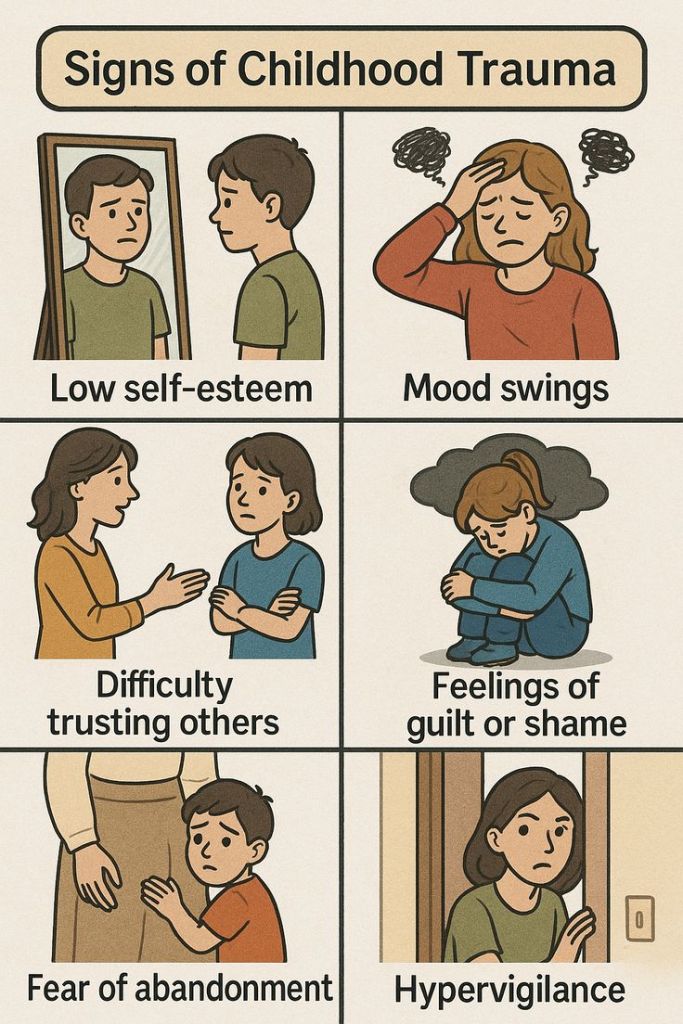
And let’s not overlook self-esteem. If your childhood was filled with positive reinforcement and emotional support, you’re likely to have the confidence to set healthy boundaries in your relationships. But if you were the kid who got picked last for dodgeball, you might struggle with self-worth and end up in a relationship that’s more toxic than a moldy sandwich.
Then there’s the dreaded Adverse Childhood Experiences (ACEs). If your childhood was like a horror movie, complete with abuse, neglect, or household dysfunction, you might have a hard time with intimacy. But fear not! Personal growth, supportive relationships, and therapy can help you rewrite your relationship script and find your happily ever after.
In the end, childhood experiences shape our adult romantic relationships in ways we might not even realize. But just like a good sitcom, there’s always room for growth, change, and a happy ending—even if it takes a few plot twists along the way.
 Melanated Sanity