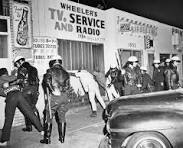
It is regrettable that the conditions prevalent nearly five decades ago continue to affect our society today. The Black Panther Party for Self-Defense emerged as a movement aimed at providing a sense of control for those left distraught and helpless due to persistent police brutality and chronic oppression perpetuated through legal legislation. Consequently, the Black community unanimously embraced the BPP. Fast forward to 50 years later, and the same conditions persist. The Black community continues to face targeted discrimination, and the treatment they receive is undermined by those in authoritative positions. Since Africans arrived on this continent in 1619, they have been disenfranchised in various domains. However, the most concerning aspect is that tensions between melanated and non-melanated individuals have resulted in distinct generational impacts. Whites (or Anglo-Saxons) continue to benefit from the privileges that our ancestors established with the very concept of race. Conversely, Blacks remain disproportionately disadvantaged on the privilege spectrum, as it was designed to be.
Black Lives Matter (BLM) draws inspiration from the Black Panther Party (BPP) movement of the 1960s, sharing a common objective of addressing racial inequality. However, BLM distinguishes itself through a more feminine approach. While the BPP predominantly consisted of male participants armed with firearms, symbolizing a masculine display of force, BLM has a significantly higher proportion of female participants. Although the BPP had approximately two-thirds of its members as women, BLM is projected to surpass this figure. The media misrepresented the Black Liberation Movement (BLM) and the Black Panther Party (BPP) of the 1960s as an attempt to discredit their efforts. They portrayed Bobby Seals and his entourage, who peacefully entered the Sacramento city hall floor with firearms brandished, as “rifle-toting radicals.” It is possible to infer that since Governor Nixon was present during this encounter, it took on a new significance of propaganda. Similar altercations have occurred.

In the context of the Black Lives Matter (BLM) movement, a notable incident occurred in Dallas, Texas, where six law enforcement officers lost their lives. While there was no loss of life during the encounter with the Black Panther Party (BPP), the overall message and treatment remain the same. The BLM movement advocates for equality and justice for Black individuals, while the opposition seeks to discredit their cause and portray them as unfit for citizenship.
This raises a pertinent question for the audience: why do Black communities attempting to establish their independence within the United States face sabotage and subsequent violence? Do they want to be viewed as mindless consumers or do they harbor fear of a community composed of financially astute and business-savvy individuals?
 Melanated Sanity